

Research and resources to save lives
Medicine

Know Your History.
Save Your Future.
Our Mission Is To Summit The Steepest Challenges In Gynecologic Cancer.
By this we mean to tackle the hardest problems in gynecologic cancer today. As science progresses and we evolve and solve these challenges, our focus will shift to the new steepest challenges until gynecologic cancers are preventable and curable for every woman.
Where We’re Pushing Higher
The three steepest challenges we are focusing on now:


Ovarian Cancer
Prevention & Early Detection

Endometrial Cancers
Advanced & Aggressive Subtypes


Health Equity
In Gynecologic Cancer

Current Research We’ve Funded

The Any Mountain project is dedicated to funding research addressing the steepest challenges in Gynecologic Cancer. This research is being conducted by an incredible team of gynecologic oncology leaders from around the country we call the Expedition Team.
Earlier Awareness
Expanding Prevention and Detection of Ovarian Cancer
Ovarian cancer remains one of the deadliest of cancers affecting women. With no reliable screening or early detection test, most women with ovarian cancer are diagnosed with advanced stage metastatic cancer.
Despite remarkable advances in treatment, the majority of women with advanced stage ovarian cancer will ultimately die of their disease.
Early stage ovarian cancer can be cured. Women with hereditary breast and ovarian cancer syndrome (HBOC) due to mutations in the BRCA 1 & 2 genes have dramatically elevated risk for ovarian cancer. Identification of these individuals through widespread and accessible genetic testing allows women to undergo proven risk reduction interventions. Innovative surgical strategies will lead to improved cancer prevention with fewer long term effects on overall health and survivorship. Innovative research strategies are needed to develop effective screening and early detection tests



Innovative Treatment
Confronting the Rise of Aggressive Endometrial Cancer
Endometrial cancer remains the most common gynecologic cancer with over 67,000 women expected to receive a diagnosis in 2024. Over the past decade, endometrial cancer incidence rates have continued to steadily rise by about 1% per year in White women and by a startling 2% to 3% per year in women of all other racial/ethnic groups.
Uterine cancer is one of the few cancers with increasing mortality; since the mid-2000s the death rate has risen by 1.7% per year.
The face of endometrial cancer has changed over time with aggressive histologies and advanced stage disease both on the rise. Deaths from endometrial cancer are expected to eclipse those from ovarian cancer in 2024. Despite these startling statistics, endometrial cancer remains an under investigated and underfunded disease.
Lack of awareness of typical uterine cancer symptoms can delay women from seeking care when symptoms present. Other factors, such as negative healthcare experiences, embarrassment, stigma, and lack of trust, time, and resources, also cause women to delay seeking care. These barriers result in delayed diagnoses, delayed treatment and worse outcomes.
Urgent Action. Better Outcomes
Any Mountain believes that URGENT ACTION is necessary to reduce endometrial cancer rates and improve treatment and survival outcomes.
We aim to:

Inform women about uterine cancer and its symptoms.

Empower women with endometrial cancer with the resources they need to obtain expert gynecologic cancer care.

Fund Innovative Research to better understand the biology of uterine cancer with a particular focus on high grade and aggressive histologies.

Support Research to understand the drivers of uterine cancer survival disparities and to ensure that clinical trials recruit racially and ethnically diverse patient populations.
Systemic Change
Improving Health Equity in Gynecologic Cancer
Racial inequality is deeply embedded in the field of medicine. While race has no intrinsic biological basis, it functions as an inexact proxy for a constellation of factors (socio/economic, cultural, & genetic) in our race conscious society.
Racism is the social stratification and unequal allocation of opportunity & resources on the basis of the social construct of race/ethnicity. Racism was woven into the history of this country and permeates all of our institutions, including healthcare, today.
Historical racist atrocities in women’s health are too many to enumerate:
- Forced sterilization of women of color
- Increased hysterectomy rates of black women
- Obstetrical tools tested without anesthesia
- Pharmaceutical experimentation with no consent
- And more, and more, and more…
Confronting Inequities in Women’s Care
Today, we face wide sweeping inferior health outcomes for women of color, combined with a profound mistrust of health care systems by communities of color.
Women of color have higher rates of developing and dying from cancer. Increased exposure to cancer risk factors leads to disproportionate burden of disease with a greater likelihood of having the cancer diagnosed at a later stage and higher rates of surgical complications from cancer surgeries. Women of color are disproportionately treated by physicians at lower-volume hospitals, have higher rates of mortality after cancer surgery, and lower enrollment in clinical research trials.
Here are a few examples in gynecologic cancer:
Endometrial Cancer
Black women with Endometrial Cancer have an overall 55% higher 5-year mortality risk than white women (Cote, 2015).
Ovarian Cancer
The 5-year survival for Ovarian Cancer has increased from 33% to 48% among White women but decreased from 44% to 41% in Black women over time (NIH).

Cervical Cancer
Despite being both preventable and curable, Cervical Cancer disproportionately impacts lower income women in the US is a devastating global killer in low resource countries.
If we end racism in women’s cancer care, we will save a tremendous number of lives.
My love you were with me, right by my side.
Acting really tough, trying hard not to cry.
You said to be strong, we’ll fight this head on.
Take a leap of faith, and the journey’s begun.

Any Mountain Expedition Team
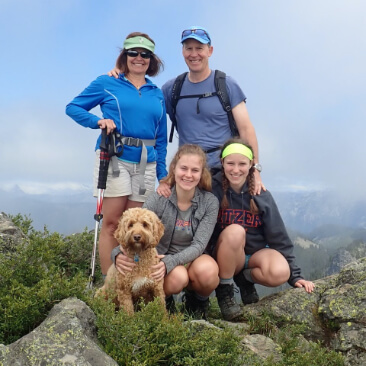
Dr. Elizabeth Swisher
Professor Division of Gynecologic Oncology, Department of Obstetrics and Gynecology | UW Medicine, Deputy Director, Fred Hutch / UW / Seattle Children’s Cancer Consortium, Torkelson Family Endowed Chair
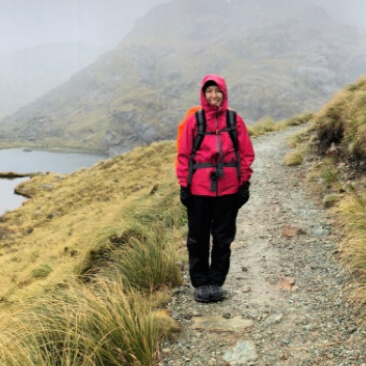
Dr. Karen Lu
Executive vice president and physician in chief at Moffitt Cancer Center

Dr. Jamie Bakkum-Gamez
Professor of OB/GYN, Consultant in Gynecologic Oncology Surgery, Mayo Clinic, Rochester, Minnesota
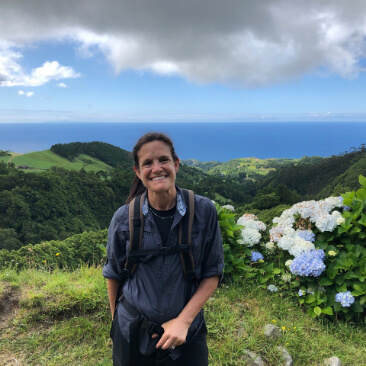
Dr. Stephanie Blank
Professor of Obstetrics, Gynecology, and Reproductive Science, Icahn School of Medicine at Mount Sinai; Director of Gynecologic Oncology, Mount Sinai Health System; Director of Oncology Programs, Blavatnik Family Women’s Health Research Institute; Director of Women’s Health, Blavatnik Family Chelsea Medical Center at Mount Sinai

Dr. Dineo Khabele
Chair of the Department of Obstetrics and Gynecology, Mitchell and Elaine Yanow Professor of Obstetrics and Gynecology, Washington University School of Medicine in St. Louis

Dr. Kara Long
Associate Attending, Gynecologic Surgery, Associate Director, Gynecologic Oncology Fellowship Program, Section of Ovarian Cancer Surgery, Department of Surgery, Memorial Sloan Kettering Cancer Center
Get Involved
Join the Climb
Summitting the steepest challenges in gynecologic cancer through creativity and research.
Our original music & mountain adventures inspire cancer awareness and research funding with every song and every step.

Apply For Research Funding
Are you a gynecologic cancer researcher in need of funding?
Our Expedition Team allocates between 20K and 300K dollars in annual Any Mountain Research Grants for creative cutting-edge research addressing the steepest challenges in gynecologic cancer.
Please email us about your work and we will inform you about our next call for proposals.